

Understanding Altcoins: ? The ULTIMATE Beginner’s Guide to Cryptocurrencies Beyond Bitcoin & Ethereum
Introduction: Beyond the Giants – Why Altcoins Matter in Your Crypto Journey ?
When the words “cryptocurrency” or “digital assets” pop up in conversation, two names almost instantly spring to mind: Bitcoin (BTC) and Ethereum (ETH). And for very good reason! These two titans have dominated headlines, market capitalization charts, and countless investment discussions, proving their immense impact on the global financial landscape. They are the foundational pillars of the decentralized revolution. However, for those interested in understanding altcoins and their potential, it’s important to look beyond these giants and explore their potential.
But what if we told you that beyond these two digital behemoths lies an entire, incredibly vast, and rapidly evolving universe of thousands upon thousands of other cryptocurrencies? These are collectively known as “altcoins” – short for “alternative coins” – and they represent the incredible innovation, diversity, and sometimes, the wild frontier of the crypto world.
Welcome, curious explorer, to the thrilling journey of understanding altcoins. If you’re a beginner in the crypto space, or perhaps an experienced investor looking to expand your horizons beyond just BTC and ETH, this is your definitive guide. We’ll demystify what altcoins are, delve into their diverse types, and meticulously explain exactly why diversifying your crypto portfolio with these alternative assets can be a smart, strategic, and potentially rewarding move.
By the end of this guide, you’ll not only have a clear grasp of the altcoin landscape but also practical insights on altcoin investing for beginners, including how to research projects and how to buy altcoins safely. So, buckle up! Your comprehensive guide to the crypto world beyond Bitcoin and Ethereum starts now.
II. What Exactly Are Altcoins? Unpacking the “Alternative Coin” Term ?
The term “altcoin” might sound complex, but its definition is remarkably straightforward: any cryptocurrency that is not Bitcoin. Yes, that’s it! From Ethereum itself (which was once considered “just an altcoin”) to the most obscure new project launched last week, if it’s not BTC, it’s an altcoin.


A. Defining “Altcoin”: An Evolution of Digital Currencies
When Bitcoin was created in 2009, it was a groundbreaking invention – the first decentralized digital currency. It proved that a peer-to-peer electronic cash system, free from central bank control, was possible. However, as brilliant as Bitcoin is, it was primarily designed for one purpose: secure, decentralized value transfer (often called “digital gold”).
As the blockchain technology evolved, developers began to see possibilities beyond simple currency. They wanted to build more versatile, faster, or more specialized digital assets. This led to the creation of thousands of new cryptocurrencies, each with its own unique blockchain, consensus mechanism, or set of features. These are the altcoins.
Think of it this way: If Bitcoin is like the original Model T Ford – revolutionary and foundational – then altcoins are all the cars that came after: sports cars, family sedans, trucks, electric vehicles. Each designed to serve a different purpose, offer different features, and appeal to different needs.
B. Purpose & Innovation: The Driving Force Behind Altcoin Creation ??
Why do thousands of altcoins exist? Because developers constantly strive to innovate and solve new problems within the digital space. Altcoins were born out of a desire to:
- Address Perceived Limitations of Bitcoin: While revolutionary, Bitcoin has certain design choices that limit its scalability (number of transactions per second), programmability (what you can build on its blockchain), and energy efficiency (Proof-of-Work). Many early altcoins aimed to improve these aspects.
- Introduce New Functionalities & Use Cases: This is where altcoins truly shine. They enable entirely new sectors and applications that go far beyond just being a digital currency.
- Smart Contracts: Programmable agreements that automatically execute when conditions are met (pioneered by Ethereum). This opened the door for complex decentralized applications.
- Decentralized Finance (DeFi): Building lending, borrowing, trading, and insurance platforms without traditional banks.
- Non-Fungible Tokens (NFTs): Unique digital assets representing ownership of art, music, collectibles, and more.
- Web3 & Metaverse: Laying the groundwork for a decentralized internet and immersive virtual worlds where users own their data and assets.
- Supply Chain Management: Using blockchain for transparency and efficiency in logistics.
- Identity Management: Creating self-sovereign digital identities.
Each altcoin, ideally, represents a solution to a problem, a new technology, or a specific function within the growing blockchain ecosystem. This spirit of continuous innovation is what makes the altcoin market so dynamic and, potentially, so rewarding for investors.
III. Why Diversify with Altcoins? The Potential & The Pitfalls ?
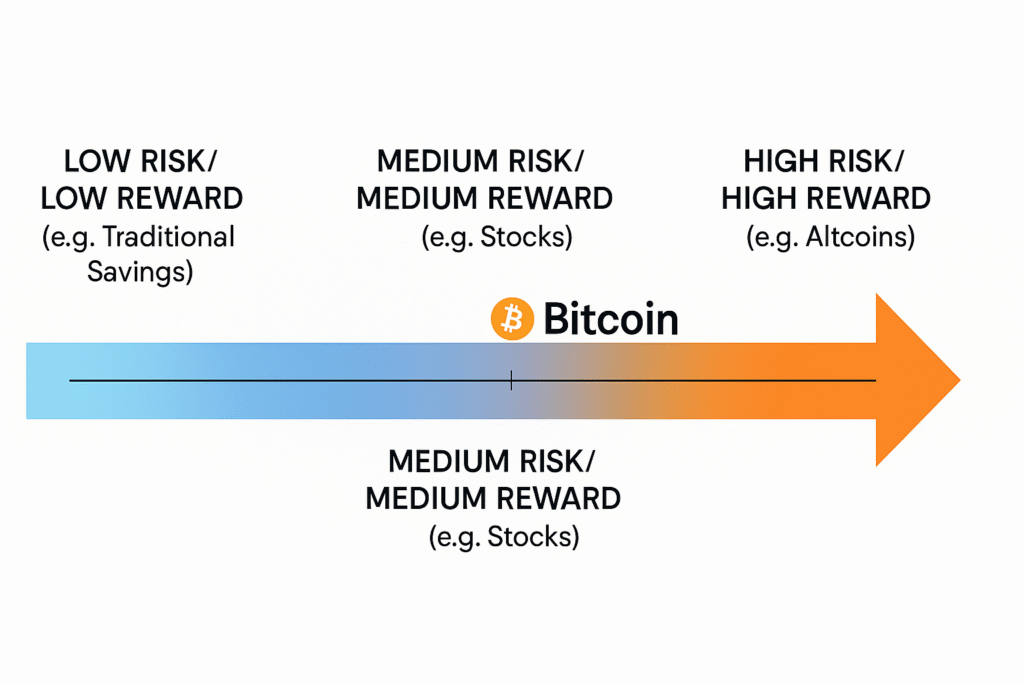
You might be thinking, “If Bitcoin and Ethereum are so great, why bother with anything else?” That’s a valid question. While BTC and ETH are cornerstones of many crypto portfolios, limiting yourself to just these two assets means potentially missing out on significant opportunities and, paradoxically, can even increase certain types of risk. Diversifying your crypto portfolio with altcoins, when done thoughtfully and strategically, can unlock new growth avenues.

A. Potential Benefits of Altcoin Diversification: Unlocking New Growth ?
- Higher Growth Potential (Exponential Upside):
- Understanding Market Cap: Bitcoin and Ethereum already have enormous market capitalizations (total value of all coins in circulation). For them to double in price, trillions of dollars need to flow into them.
- The Altcoin Advantage: Many altcoins have much smaller market caps (e.g., hundreds of millions or even tens of millions of dollars). This means that even a relatively smaller influx of capital or increased adoption can lead to significantly larger percentage gains – sometimes 100%, 500%, or even 1000%+.
- Analogy: Think of a large, established company like Apple (BTC/ETH) vs. a promising tech startup (an altcoin). The startup has a much higher potential for explosive percentage growth, even if it’s riskier.
- Technological Innovation & Exposure:
- Frontier Tech: Altcoins are often at the forefront of blockchain development, introducing cutting-edge technologies that improve upon existing systems or create entirely new functionalities.
- Sector-Specific Opportunities: By investing in altcoins, you gain exposure to specific, rapidly evolving sectors within the crypto ecosystem, such as decentralized finance (DeFi), Web3 gaming, metaverses, AI-integrated blockchain solutions, and real-world asset (RWA) tokenization.
- Example: If you believe the future of finance is decentralized lending, investing in a leading DeFi altcoin gives you direct exposure to that growth.
- Reduced Portfolio Risk (Paradoxically, with a Caveat):
- Spreading Your Bets: While individual altcoins are riskier, holding a diversified portfolio across different altcoin categories, technologies, and use cases can actually reduce overall portfolio risk compared to putting all your eggs in one basket (even if that basket is BTC or ETH). If one project faces headwinds, others might not.
- Non-Correlation (Sometimes): While the entire crypto market often moves with Bitcoin, some altcoins may have their own unique catalysts or narratives that allow them to perform independently at times, offering a hedge.
- Access to Niche & Emerging Markets:
- Tailored Solutions: Some altcoins are designed for very specific industries or problems. Diversifying allows you to support and potentially profit from these targeted solutions.
- Early Adoption: Investing in promising altcoins early can give you a significant advantage if they gain widespread adoption.
B. Inherent Risks & Considerations: Navigating the Volatility ?
While the potential of altcoin investing for beginners is exciting, it’s absolutely crucial to understand the magnified risks involved.
- Higher Volatility (The Double-Edged Sword):
- Rapid Price Swings: Altcoins, especially those with smaller market caps, can experience far more extreme and rapid price fluctuations than Bitcoin or Ethereum. A 20-30% move in a day is not uncommon, in either direction.
- Impact on Beginners: This high volatility can be emotionally challenging for new investors and lead to panic selling or buying at the wrong times.
- Analogy: If Bitcoin is like a large, stable ship, many altcoins are like speedboats – they can go much faster but are also much more susceptible to the waves.
- Lower Liquidity:
- Definition: Liquidity refers to how easily an asset can be bought or sold without significantly affecting its price.
- The Problem: Smaller altcoins often have thin trading volumes. This means that if you own a large amount, selling it quickly might drive the price down, impacting your own exit. Conversely, large buy orders can significantly push the price up.
- Impact: Lower liquidity can lead to higher “slippage” during trades, meaning you might not get the exact price you expect.
- Project Risk & Failure:
- High Failure Rate: The crypto space is highly experimental. Many altcoin projects, despite promising ideas, fail to gain traction, face technical challenges, or are simply abandoned by their developers.
- Competition: The market is fiercely competitive, and even good ideas can be outcompeted.
- Impact: If a project fails, the value of its altcoin can drop to zero, resulting in a total loss of investment.
- Scams, Rug Pulls, & Lack of Regulation:
- Prevalence: Unfortunately, the less-regulated nature of the altcoin market makes it a fertile ground for malicious actors. “Rug pulls” (where developers abandon a project and steal investor funds) are a tragic reality.
- Pump-and-Dump Schemes: Smaller altcoins are more susceptible to coordinated “pump-and-dump” schemes, where groups artificially inflate a price only to sell off their holdings, leaving new investors with losses.
- Impact: Investors can lose their entire investment due to fraudulent activities.
- Crucial Advice: Always, always, always conduct thorough due diligence. If something sounds too good to be true, it almost certainly is.
The crucial takeaway for altcoin investing for beginners: The potential rewards are often amplified, but so are the risks. A balanced, highly informed, and risk-managed approach is paramount. Never invest more than you can afford to lose, especially in more speculative altcoins.
IV. Navigating the Altcoin Universe: Common Types of Altcoins ?
The world of altcoins is incredibly vast and varied, with thousands of projects each designed for specific purposes. To help you in understanding altcoins, it’s helpful to categorize them by their primary function or underlying technology.
(Visual Suggestion: An infographic showing different categories of altcoins with an icon and 1-2 examples for each, e.g., a “DeFi” bubble with Aave & Uniswap icons; a “Meme” bubble with Doge & Shiba icons.)
A. Platform Tokens: The Building Blocks of Decentralization
- What they are: These altcoins power a blockchain network designed to host and execute decentralized applications (dApps) and smart contracts. They provide the infrastructure for other crypto projects to build upon. They compete directly with, or offer alternatives to, Ethereum’s pioneering smart contract capabilities.
- How they work: Users typically pay fees in the platform’s native token to conduct transactions or run dApps. Holding these tokens often grants users governance rights or enables them to participate in network security (e.g., staking).
- Examples:
- Solana (SOL): Known for its high transaction speed and low fees, aiming to be a scalable platform for dApps.
- Cardano (ADA): Focuses on research-driven development and peer-reviewed blockchain technology, with a strong emphasis on security and sustainability.
- Polkadot (DOT): Aims to connect multiple blockchains (parachains) into a single network, enabling interoperability.
- Avalanche (AVAX): Offers a highly scalable and customizable platform for launching dApps and custom blockchain networks.
- BNB (BNB Chain): Powers the BNB Chain ecosystem (formerly Binance Smart Chain), known for its speed and lower transaction costs, popular for DeFi and gaming.
- Learn More: [INTERNAL LINK: What is Ethereum (ETH)? Your Complete Guide to the Smart Contract Revolution]
B. Stablecoins: The Crypto World’s Safe Haven ??
- What they are: Unlike the volatile nature of most cryptocurrencies, stablecoins are specifically designed to maintain a stable value. They are typically pegged to a stable asset, most commonly a fiat currency like the US Dollar, but sometimes to commodities like gold or even a basket of cryptocurrencies.
- How they work:
- Fiat-backed: Most common, where a company holds reserves of the fiat currency equal to the number of stablecoins in circulation (e.g., USDT, USDC).
- Crypto-backed: Overcollateralized by other cryptocurrencies.
- Algorithmic: Rely on algorithms and market mechanisms to maintain their peg (though some historical failures make these higher risk).
- Examples:
- Tether (USDT): The largest stablecoin by market cap, primarily backed by US dollar reserves.
- USD Coin (USDC): Another widely used stablecoin, known for its transparency and regulatory compliance.
- Dai (DAI): A decentralized, crypto-backed stablecoin.
- Purpose: Stablecoins are crucial for crypto traders (allowing them to exit volatile positions without converting to fiat), for lending/borrowing in DeFi, and for global payments.
C. Decentralized Finance (DeFi) Tokens: Reshaping Global Finance ?


- What they are: These altcoins are the backbone of decentralized finance applications, which aim to recreate traditional financial services (like lending, borrowing, trading, and insurance) on blockchain networks, removing central intermediaries.
- How they work: DeFi tokens often serve multiple functions:
- Governance: Grant holders voting rights on the protocol’s future.
- Utility: Used to pay for services within the DeFi app (e.g., transaction fees, loan interest).
- Rewards: Earned by users for providing liquidity or participating in the protocol.
- Examples:
- Uniswap (UNI): The governance token for Uniswap, a leading decentralized exchange (DEX).
- Aave (AAVE): A token for a decentralized lending and borrowing protocol.
- Chainlink (LINK): An “oracle” network that provides real-world data to smart contracts, essential for many DeFi applications.
- Deep Dive: [INTERNAL LINK: Decentralized Finance (DeFi) Explained: Your Gateway to Crypto Banking] (Suggesting a future article if not yet published)
D. Meme Coins: The Power of Community & Culture ?
- What they are: Meme coins are cryptocurrencies inspired by internet memes, jokes, or pop culture phenomena. Their value is primarily driven by social media hype, community enthusiasm, and viral trends rather than fundamental technology or intrinsic utility.
- How they work: Often created quickly, sometimes with extremely large supplies (e.g., trillions of tokens), their price movements can be highly speculative and volatile.
- Examples:
- Dogecoin (DOGE): The original meme coin, inspired by the Shiba Inu dog meme.
- Shiba Inu (SHIB): Known as the “Dogecoin killer,” it gained immense popularity and built its own ecosystem.
- Pepe Coin (PEPE): A more recent meme coin based on the Pepe the Frog internet meme.
- Characteristics: While some meme coins have developed communities and even limited utility, their primary characteristic is extreme volatility and reliance on speculative interest. They represent a high-risk, high-reward segment of the altcoin market.
E. Utility Tokens: Fueling Specific Services ?
- What they are: Utility tokens provide users with access to a specific product or service within a particular blockchain ecosystem. They are designed to be “used” rather than purely speculated upon.
- How they work: You might use them to pay for decentralized storage, access premium features on a platform, or participate in a decentralized network.
- Examples:
- Filecoin (FIL): Used to pay for decentralized file storage on the Filecoin network.
- Basic Attention Token (BAT): Used to reward users for viewing privacy-respecting ads on the Brave browser.
- Theta (THETA): Powers a decentralized video streaming network.
F. Governance Tokens: A Voice in the Decentralized World ??
- What they are: Governance tokens grant their holders voting rights on the future development and operational decisions of a decentralized project or protocol. They embody the decentralized spirit of crypto by giving power to the community.
- How they work: Holders can propose changes, vote on proposals (e.g., fee structures, treasury allocations, protocol upgrades), and influence the direction of the project.
- Examples:
- Compound (COMP): Allows holders to vote on changes to the Compound lending protocol.
- Maker (MKR): The governance token for the MakerDAO ecosystem, which issues the DAI stablecoin.
G. NFTs & Gaming Tokens: The Digital Ownership Revolution ???
- What they are: These altcoins are specifically tied to the booming sectors of Non-Fungible Tokens (NFTs) and blockchain-based gaming (often called GameFi). They enable in-game economies, digital ownership, and metaverse interactions.
- How they work: Gaming tokens can be used to buy in-game assets, participate in play-to-earn mechanics, or serve as governance tokens for gaming DAOs. NFTs represent unique digital assets (art, collectibles, in-game items) that are verified on a blockchain.
- Examples:
- Axie Infinity (AXS/SLP): Tokens for the popular play-to-earn blockchain game.
- Decentraland (MANA): Used to buy land and goods within the Decentraland metaverse.
- The Sandbox (SAND): Another metaverse platform token for buying virtual land and assets.
V. Investing in Altcoins for Beginners: Key Considerations Before You Buy ?
Successfully navigating the altcoin market and mitigating its inherent risks requires more than just luck – it demands thorough research and a disciplined approach. As a beginner, applying these key considerations will help you make more informed decisions and increase your chances of success when investing in altcoins.
(Visual Suggestion: An infographic illustrating “DYOR” with magnifying glass icons, flowcharts for research steps, and checkmarks for due diligence points.)
A. Thorough Research (DYOR – Do Your Own Research): Your Crypto Compass ?
This is the single most critical piece of advice in crypto. Never invest based on mere hype, social media trends, or a single recommendation. Your investment should be backed by your own understanding.
- Read the Whitepaper: This document outlines the project’s vision, technology, proposed solutions, and roadmap. It’s the project’s blueprint. Does it make sense? Is the problem it’s solving significant?
- Investigate the Team: Who is behind the project? Look into their experience, past successes, transparency, and public reputation. A strong, experienced team is a huge positive signal. Are they doxxed (publicly identifiable)?
- Understand the Use Case/Problem Solved: Does the altcoin genuinely address a real problem or offer a unique value proposition? Is there a clear need for its existence? Avoid projects that seem to solve a problem that doesn’t exist.
- Analyze Community & Development Activity: Is the project actively being built and supported? Check their GitHub repositories for recent code commits, their social media channels (Twitter/X, Discord, Telegram) for community engagement, and their official blogs for updates. A vibrant, active community is a good sign.
- Competitor Analysis: Who are their competitors? How does this altcoin compare in terms of technology, team, adoption, and vision? Is there a sustainable competitive advantage?
B. Market Capitalization: Understanding Scale and Risk ?
Market capitalization (Market Cap) is the total value of all circulating coins of a cryptocurrency. It’s calculated by: Current Price x Circulating Supply. Understanding market cap helps gauge a project’s size and relative risk.
- Large-Cap Altcoins (e.g., $10B+): More established, generally less volatile, but with less room for explosive percentage growth. Examples: Solana (SOL), Cardano (ADA).
- Mid-Cap Altcoins (e.g., $1B – $10B): Offer a balance of growth potential and a more established presence. They have higher risk than large caps but more upside.
- Small-Cap Altcoins / Micro-Caps (e.g., < $1B, especially <$100M): Highest potential for explosive percentage gains, but also the highest risk, lowest liquidity, and highest chance of failure or scams. These require the most diligent research.
C. Tokenomics (Token Economics): The Heartbeat of the Coin ?


Tokenomics refers to the economic model governing a cryptocurrency. It’s crucial for long-term value.
- Supply: What is the total supply of the token? Is it fixed (like Bitcoin), or can more be minted (inflationary)? A limited supply can create scarcity.
- Distribution: How are the tokens distributed? Is it fair? Are a large percentage held by the team or early investors? This can indicate potential for large sell-offs.
- Vesting Schedules: Are team or investor tokens locked up for a period before they can be sold? This can prevent “dumping” tokens on the market immediately after launch.
- Utility of the Token: Does the token have a real use case within its ecosystem? Is it just a speculative asset, or do people actually need it to use the platform’s services?
D. Liquidity: How Easy Is It to Buy and Sell? ?
- Definition: Liquidity measures how easily an asset can be converted into cash (or another crypto) without causing a significant price change.
- Impact: For smaller altcoins, low liquidity means that if you try to sell a large amount, you might drive the price down substantially, impacting your own exit price. Conversely, large buy orders can push the price up rapidly. Higher liquidity generally leads to smoother trading.
VI. How to Buy & Manage Altcoins Safely ?
Once you’ve diligently done your research on understanding altcoins and decided which projects align with your investment goals and risk tolerance, the next critical steps are acquiring and, most importantly, securing your digital assets. This section will guide you through the practical aspects of how to buy altcoins safely.
(Visual Suggestion: A graphic illustrating the flow from “Fiat Money” -> “Exchange” -> “Wallet” with icons for each step. Another visual comparing a “Hot Wallet” (laptop/phone icon) vs. “Cold Wallet” (hardware device icon).)
A. Choosing a Cryptocurrency Exchange: Your Gateway to Altcoins
Cryptocurrency exchanges are online platforms where you can buy, sell, and trade cryptocurrencies. They broadly fall into two categories:
- Centralized Exchanges (CEXs):
- How they work: These are traditional companies that act as intermediaries, holding your funds in custody (like a bank). They are regulated (to varying degrees depending on jurisdiction) and typically offer a user-friendly experience.
- Pros: Wide selection of altcoins, easy to convert fiat currency (USD, EUR) to crypto, robust security features (though still susceptible to hacks), customer support.
- Cons: You don’t directly control your private keys (not “your keys, not your crypto”), KYC (Know Your Customer) requirements involve providing personal information.
- Examples: Binance, Coinbase, Kraken, KuCoin, Gate.io.
- Recommendation: For beginners, starting with a reputable CEX is often the easiest entry point.
- Decentralized Exchanges (DEXs):
- How they work: DEXs allow peer-to-peer trading directly from your crypto wallet, without a central intermediary. They operate on smart contracts.
- Pros: Non-custodial (you retain control of your private keys), often list newer or more obscure altcoins before CEXs, no KYC required (generally).
- Cons: Can be more complex for beginners, higher risk of “slippage” on less liquid pairs, typically require you to already own some crypto (e.g., Ethereum or BNB) to pay for transaction fees.
- Examples: Uniswap (on Ethereum), PancakeSwap (on BNB Smart Chain), Raydium (on Solana).
- Recommendation: Once comfortable with CEXs, explore DEXs for a broader range of altcoins.
B. Securing Your Altcoins: The Golden Rule of Crypto ?
Once you buy altcoins, the paramount concern is their security. If you don’t control your private keys, you don’t truly own your crypto.
- Understanding Crypto Wallets:
- Hot Wallets (Online/Connected):
- Exchange Wallets: Funds held by the exchange (convenient, but not truly yours).
- Software Wallets: Apps on your phone or desktop (e.g., MetaMask, Trust Wallet, Exodus). More control than exchange wallets, but still connected to the internet.
- Pros: Easy access, convenient for frequent trading.
- Cons: More susceptible to hacking, phishing, or malware attacks if your device is compromised.
- Cold Wallets (Offline/Hardware Wallets):
- How they work: Physical devices that store your private keys offline, disconnected from the internet. This provides the highest level of security.
- Pros: Highly resistant to online hacking attempts, ideal for long-term storage of significant amounts of crypto.
- Cons: Less convenient for frequent trading, requires physical access to the device.
- Examples: Ledger Nano S/X, Trezor Model T/One.
- Recommendation: For significant holdings, always transfer your altcoins from an exchange to a hardware wallet. For smaller amounts or active trading, a reputable software wallet or exchange wallet can suffice, but understand the risks.
- Hot Wallets (Online/Connected):
- Essential Security Best Practices:
- Enable Two-Factor Authentication (2FA): Always use 2FA (preferably an authenticator app like Authy or Google Authenticator, not SMS) on all your exchange accounts and wallets.
- Strong, Unique Passwords: Use complex, unique passwords for every crypto-related account. Use a password manager.
- Never Share Your Private Keys or Seed Phrase: Your 12 or 24-word “seed phrase” (also called a recovery phrase) is the master key to your crypto. If someone has it, they own your funds. Never store it digitally or share it. Write it down and store it securely offline in multiple locations.
- Be Wary of Phishing Scams: Always double-check URLs, emails, and messages. Scammers often impersonate legitimate crypto services.
- Update Software: Keep your wallet software, operating system, and antivirus up to date.
- Test Small Transactions: When sending funds to a new wallet address, always send a small test amount first to confirm it works correctly before sending larger sums.
VII. The Future of Altcoins: Innovation, Evolution & Market Cycles ?
The altcoin market is not static; it’s a dynamic, rapidly evolving ecosystem that reflects the cutting edge of blockchain technology and decentralized innovation. Understanding altcoins means understanding their constant evolution.
A. Continuous Development & Emerging Narratives:
- Rapid Innovation: New projects, protocols, and use cases are constantly emerging. Yesterday’s obscure altcoin could be tomorrow’s breakthrough technology.
- New Categories: Beyond the types we’ve discussed, new narratives continually gain traction. Examples include:
- AI-powered Crypto Agents: Projects integrating artificial intelligence with blockchain for various applications.
- Real-World Assets (RWAs) Tokenization: Bringing real-world assets (like real estate, art, or commodities) onto the blockchain as tokens.
- Liquid Restaking: Innovations within the staking ecosystem, building layers of yield on top of staked assets.
- Modular Blockchains: Projects focusing on building specialized blockchain layers for scalability and efficiency.
- Stay Informed: To keep up, follow reputable crypto news sources, industry thought leaders, and the official channels of projects you’re interested in.
B. Market Cycles & “Altcoin Season”: Riding the Waves ?
While the entire crypto market often moves in tandem with Bitcoin’s price fluctuations, altcoins frequently experience periods of explosive growth, sometimes referred to as “altcoin season.”
- How it works: Typically, Bitcoin leads a bull run. Once BTC experiences significant gains and perhaps consolidates, investors often rotate their profits into larger-cap altcoins, then mid-caps, and finally into small-cap altcoins, seeking higher returns. This rotation drives the “altcoin season.”
- Indicators: Metrics like Bitcoin Dominance (BTC.D – Bitcoin’s market cap as a percentage of the total crypto market cap) are often watched. A significant drop in BTC.D while the overall market cap is stable or rising can signal the start of an altcoin season.
- Learn More: [INTERNAL LINK: Navigating Altcoin Season: Strategies for Spotting the Next Big Mover] (Suggesting a future article if not yet published)
VIII. Conclusion: Smart Diversification in a Dynamic Market ?
Congratulations! By reading this guide, you’ve taken a significant step in understanding altcoins and the vast opportunities they present in the cryptocurrency landscape. You now know that beyond Bitcoin and Ethereum, there’s a universe of innovative digital assets offering unique functionalities, from powering decentralized finance to shaping the future of gaming and the internet.
Key Takeaways for Altcoin Investing for Beginners:
- Altcoins are more than just “other coins”; they are often at the forefront of blockchain innovation.
- Diversification can unlock higher growth potential and spread risk, but it comes with amplified volatility and project-specific risks.
- The market categorizes altcoins into Platform, Stablecoin, DeFi, Meme, Utility, Governance, and NFT/Gaming tokens, each with a distinct purpose.
- Thorough research (DYOR), understanding market cap and tokenomics, and prioritizing liquidity are non-negotiable steps before investing.
- Always choose reputable exchanges and, most importantly, secure your assets in cold storage when holding significant amounts.
The crypto market is dynamic, and altcoins represent its cutting edge. While immensely promising, they demand respect, continuous learning, and disciplined risk management. Never invest more than you can comfortably afford to lose, and approach every investment with an informed, long-term perspective.
By embracing informed crypto diversification, you’re not just investing in digital assets; you’re participating in the ongoing revolution of finance, technology, and digital ownership. The future is decentralized, and understanding altcoins is your key to navigating it.
Frequently Asked Questions About Altcoins
What exactly is an altcoin, and how is it different from Bitcoin?
An “altcoin” is simply any cryptocurrency that is **not Bitcoin**. The term stands for “alternative coin.” While Bitcoin was the first decentralized digital currency, altcoins were created to offer new functionalities, address perceived limitations of Bitcoin (like speed or programmability), or serve specific purposes within various blockchain ecosystems (e.g., decentralized finance, gaming, unique digital assets). Think of Bitcoin as the original digital gold, and altcoins as the diverse range of digital tools and innovations that have emerged since.
Why should I consider diversifying my crypto portfolio with altcoins?
Diversifying with altcoins can offer several benefits beyond just holding Bitcoin and Ethereum. These include **higher growth potential** due to their smaller market capitalizations, exposure to cutting-edge **technological innovation** in new sectors like DeFi and NFTs, and potentially **reduced overall portfolio risk** by spreading your investments across various projects. However, it’s crucial to remember that altcoins also come with higher volatility and risks compared to BTC or ETH.
What are the biggest risks involved in altcoin investing for beginners?
For beginners, the main risks in altcoin investing are **higher volatility**, meaning rapid and significant price swings, and **lower liquidity** for smaller coins, making them harder to buy or sell without impacting price. There’s also a higher **project failure rate**, as many altcoins don’t succeed long-term, and an increased risk of **scams or “rug pulls”** due to the less-regulated nature of the market. Always prioritize thorough research and invest only what you can afford to lose.
How do I research altcoins effectively before making an investment?
Effective research, or “Do Your Own Research (DYOR),” is crucial. Start by reading the project’s **whitepaper** to understand its vision and technology. Investigate the **team** behind the project, assessing their experience and transparency. Evaluate the **use case**—does it solve a real problem? Check **community engagement and development activity** on platforms like GitHub and social media. Finally, analyze the **tokenomics** (supply, distribution, utility) to understand the coin’s economic model.
What’s the safest way to store my altcoins once I’ve purchased them?
The safest way to store a significant amount of altcoins is typically in a **cold wallet**, specifically a hardware wallet (like Ledger or Trezor). These devices store your private keys offline, making them highly resistant to online hacking attempts. While centralized exchange wallets and software wallets (hot wallets) offer convenience, they are more susceptible to risks because they are connected to the internet. For long-term holdings, “not your keys, not your crypto” is the golden rule, emphasizing self-custody.
?? Disclaimer: The content provided in this article is for informational and educational purposes only and should not be considered financial advice. Cryptocurrency investments are highly volatile and carry a significant risk of loss. Always conduct your own research (DYOR) and consult with a qualified financial professional before making any investment decisions.


? Jawad — Founder & Lead Writer at CoinFulcrum
I’m a crypto researcher, blockchain enthusiast, and the voice behind CoinFulcrum.com. My mission is to simplify complex crypto topics and explore how emerging tech is reshaping finance.
When I’m not analyzing DeFi trends or testing new AI tools, I’m creating content to help you stay ahead of the curve.
Discover more from CoinFulcrum
Subscribe to get the latest posts sent to your email.


