


Beyond the Basics: Your First Steps into Altcoin Analysis & Discovery ??????
I. From Understanding to Uncovering – Your Next Crypto Step ?
You’ve taken the essential step: you’ve ventured beyond the familiar realms of Bitcoin and Ethereum, gaining a foundational understanding of what altcoins are, their diverse types, and why they matter for portfolio diversification. That’s a huge leap! But now comes the exhilarating, and sometimes daunting, next challenge: How do you actually find promising altcoins amidst the ocean of thousands of projects? ?
In the fast-paced, often-hyped world of cryptocurrency, the difference between riding a wave of innovation and being swept away by speculation often boils down to one critical skill: analysis. This guide is your compass and magnifying glass ?, designed to empower you to move beyond crypto hype and start your own journey of informed altcoin analysis and discovery.
We’re going to break down the complex world of crypto project analysis for beginners into digestible, actionable steps. You’ll learn exactly what to look for in an altcoin, discover practical tools to research altcoins effectively, and ultimately, equip yourself with the knowledge to build your very own robust altcoin discovery process. Get ready to transform from a casual observer into a savvy crypto detective, capable of spotting potential gems and avoiding common pitfalls. Let’s dig in!
II. What is Altcoin Analysis & Why It Matters for Beginners? ?
Before we plunge into the details, let’s clarify what “altcoin analysis” actually means. It’s more than just glancing at a price chart or reading a tweet about a new coin.
A. Defining Altcoin Analysis: Your Investment Blueprint
Altcoin analysis is the process of evaluating a cryptocurrency project’s fundamental strengths, technological innovation, team, economic model, and potential for adoption to determine its long-term viability and investment potential. It involves scrutinizing various aspects of a project to form an informed opinion on its true value, rather than just its current market price.
Think of it like evaluating a traditional business: you wouldn’t invest in a company just because its stock price went up last week. You’d look at its business model, management team, financials, market, and future prospects. Altcoin analysis applies a similar rigorous approach to digital assets.
B. Why It’s Crucial for Beginners: Building a Smarter Strategy
For anyone stepping into the altcoin market, understanding why altcoin analysis matters is paramount:
- Mitigating Risk ??: The altcoin market is fertile ground for both innovation and scams. By learning how to research crypto projects, you drastically reduce your exposure to “rug pulls” (where developers abandon a project after raising funds), pump-and-dump schemes, and fundamentally flawed projects destined to fail. Analysis is your primary defense.
- Spotting Genuine Opportunity ?: While Bitcoin and Ethereum are established, many altcoins offer higher growth potential due to their smaller market capitalizations. Effective analysis helps you identify projects with strong underlying technology and real-world utility before they become mainstream, potentially leading to significant returns.
- Building Confidence & Conviction ?: When you understand why you’re investing in a particular altcoin – based on your own research – you’ll be less prone to panic selling during market downturns or FOMO (Fear Of Missing Out) buying during unsustainable pumps. Your decisions will be driven by conviction, not emotion.
- Moving Beyond Hype and Speculation ?: The crypto space is notorious for rapid hype cycles. Learning to analyze projects equips you to critically evaluate claims, discern legitimate innovation from empty promises, and avoid falling victim to speculative bubbles. It transforms investing from gambling into a calculated strategy.
C. The Goal: Informed Decision-Making
Ultimately, the goal of altcoin analysis is to empower you to make informed investment decisions that align with your personal financial goals and risk tolerance. It’s about taking control of your crypto journey, rather than simply following trends or external advice.
III. Fundamental Analysis for Altcoins: What to Look For ?????
Now, let’s roll up our sleeves and dive into the core components of fundamental altcoin analysis. These are the key areas you’ll investigate to uncover a project’s true potential.

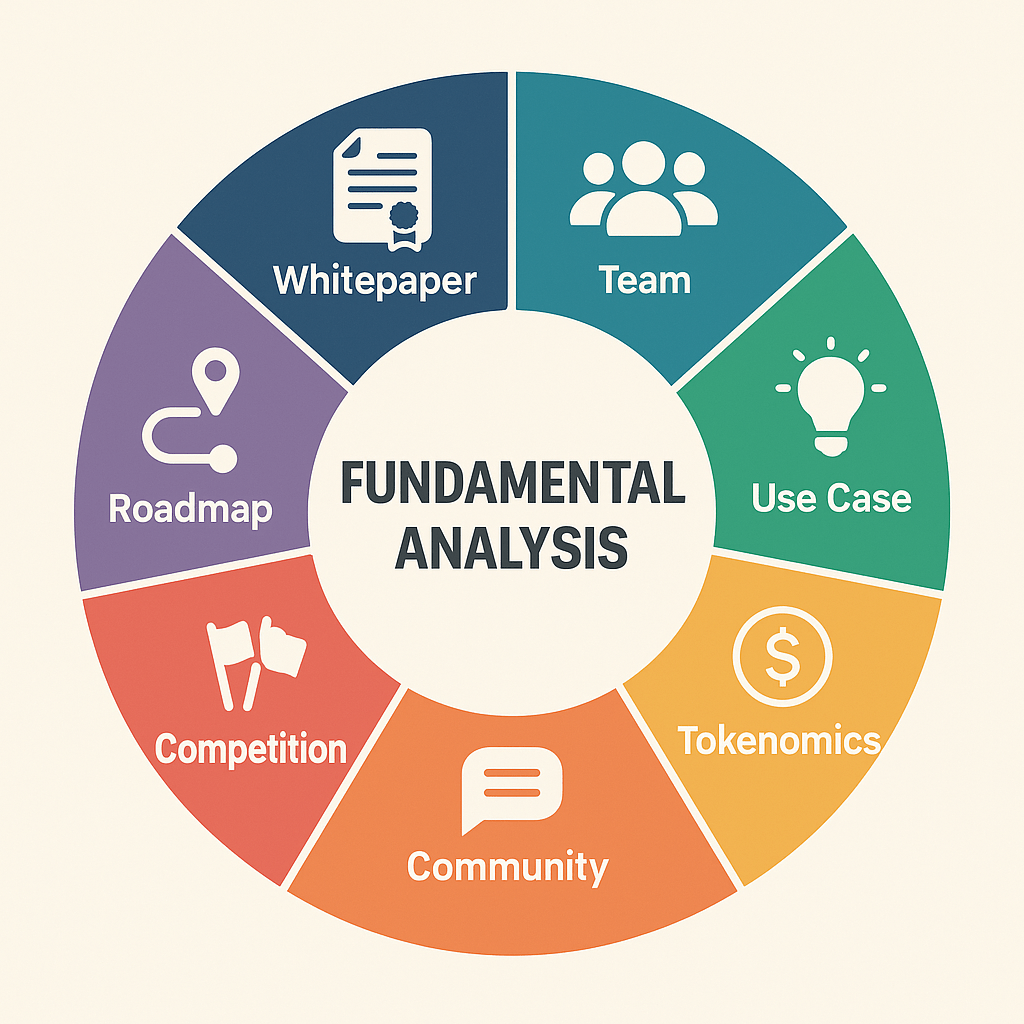
A. The Project’s Core: Whitepaper & Vision ?
The whitepaper is often the first and most important document you should read. It’s the blueprint, the mission statement, and the technical overview of the entire project.
- What to check:
- Clarity & Coherence: Is the language clear and easy to understand (for its technical level)? Does it flow logically?
- Problem Statement: Does the project clearly identify a problem it aims to solve? Is this problem significant and real?
- Proposed Solution: How does the altcoin/blockchain propose to solve this problem? Is the solution innovative, feasible, and sustainable?
- Technology Overview: While you don’t need to be a blockchain developer, does it explain the underlying technology? Is it unique or an improvement on existing tech?
- Roadmap: Does it include a detailed roadmap with specific, achievable milestones and timelines? Have past milestones been met (you’ll need to cross-reference this)?
- Why it matters: A well-written whitepaper demonstrates clear thinking, a solid plan, and a transparent approach from the team. It’s the project’s foundational promise.
- Red Flag ?: A whitepaper that is vague, overly filled with buzzwords without substance, poorly written, plagiarized, or simply non-existent. If they can’t clearly articulate their vision, that’s a huge concern.
B. The Team Behind the Coin ?
Even the most brilliant idea needs a capable team to bring it to life and ensure its long-term success.
- What to check:
- Experience & Expertise: Do team members have relevant experience in blockchain technology, software development, finance, cybersecurity, or the specific industry the project targets? Look for a diverse skill set.
- Transparency (Doxxed Teams): Are the team members publicly identifiable (meaning their real names and backgrounds are known and verifiable)? While some legitimate projects have anonymous founders, for beginners, a doxxed team significantly reduces the risk of scams or abandonment.
- Advisors & Partnerships: Are there reputable advisors or established companies partnering with the project? This can lend credibility and resources.
- Past Projects/Track Record: Do they have a history of successful ventures, or have they been involved in failed projects or controversies?
- Why it matters: A strong, experienced, and transparent team is a massive positive indicator of a project’s potential for execution and longevity.
- Red Flag ?: An entirely anonymous team (unless there’s a compelling decentralized reason, which is rare for new projects), a team with no verifiable experience, or a team that frequently changes members without explanation.
C. Real-World Use Case & Problem Solved ?
A strong altcoin isn’t just about cool technology; it’s about solving a real problem or fulfilling a genuine need in the world.
- What to check:
- Clear Value Proposition: What unique value does this altcoin offer? Who are its target users, and what benefit do they derive?
- Demand: Is there a genuine, existing, or emerging demand for the solution this project provides?
- Adoption Potential: How likely is this solution to gain widespread use? Is it easy to use? Is it scalable?
- Comparison to Existing Solutions: Does it genuinely offer a better, faster, cheaper, or more secure alternative to what already exists (both in crypto and traditional industries)?
- Why it matters: Projects that address real-world problems with viable solutions have a much higher chance of long-term adoption and value appreciation.
- Red Flag ?: A project that seems to be a “solution looking for a problem,” or one that solves a problem nobody cares about. Be wary of projects with no clear real-world utility beyond speculation.
D. Tokenomics: The Economic Engine of the Altcoin ?
Tokenomics refers to the economic model and design of a cryptocurrency. It’s essentially the blueprint for how the token will function within its ecosystem and how its value is intended to be created and sustained.
- What to check:
- Supply: What is the total supply of the token? Is it fixed (like Bitcoin), or can more tokens be minted (inflationary)? A limited supply can create scarcity, potentially driving value.
- Circulating Supply: How many tokens are currently in active circulation? This is crucial for calculating market capitalization.
- Distribution: How were the tokens initially distributed? Was there a fair public sale, or is a large percentage held by the team, early investors, or founders? A highly concentrated distribution can lead to “whale” manipulation.
- Utility of the Token: What can you do with the token within its ecosystem? Is it used to pay fees, for staking, for governance, to access features, or as a medium of exchange? The more utility, the more inherent demand.
- Vesting Schedules: Are tokens allocated to the team, advisors, or early investors locked up for a period before they can be sold? Vesting schedules prevent large sell-offs that could crash the price.
- Inflation/Deflation Mechanisms: How are new tokens created or existing ones removed from circulation (e.g., burning mechanisms)? How does this affect the long-term supply?
- Why it matters: Well-designed tokenomics can foster a healthy, sustainable ecosystem, while poor tokenomics can lead to inflation, price crashes, or centralisation.
- Red Flag ?: An overly high percentage of tokens held by insiders with no vesting schedule, unclear utility for the token (just a “store of value” with no actual use), or an uncontrolled inflationary supply.
E. Community & Development Activity ?????
A vibrant, engaged community and consistent development activity are strong indicators of a project’s health and longevity.
- What to check:
- GitHub Activity: Is the project’s code repository (usually GitHub) active? Look for regular code commits, bug fixes, and new features being worked on. This is a direct measure of active development.
- Social Media Presence & Engagement: How active are their Twitter/X, Discord, Telegram, and Reddit channels? Is the team engaging with the community? Is the community asking thoughtful questions or just hyping?
- Community Size & Quality: A large, organic, and well-moderated community that discusses actual project developments (not just price) is a positive sign. Beware of communities filled with bots or spam.
- Regular Updates & Communication: Does the team provide consistent progress reports, AMAs (Ask Me Anything sessions), and transparent communication about successes and challenges?
- Why it matters: Active development means the project is evolving, and a strong community provides support, feedback, and helps drive adoption.
- Red Flag ?: Little to no GitHub activity (suggests the project is stagnant), dead social media channels, or a community that is purely focused on price speculation without discussing project fundamentals.
F. Competition & Niche ?
No project operates in a vacuum. Understanding its competitive landscape is vital.
- What to check:
- Direct Competitors: Who else is trying to solve the same problem or operate in the same niche? (Both within and outside of crypto).
- Competitive Advantage: What makes this altcoin unique? What is its sustainable differentiator (e.g., superior technology, lower fees, better user experience, stronger community, specific partnerships)?
- Market Share & Adoption: How does its current adoption or usage compare to its competitors?
- Niche Focus: Does the project have a specific, well-defined niche that it can dominate, rather than trying to be everything to everyone?
- Why it matters: A project with a clear competitive edge and a viable strategy to gain market share has a much higher chance of long-term success.
- Red Flag ?: No clear competitive advantage over existing, well-established projects, or entering an oversaturated market without significant innovation.
G. Roadmap & Milestones ??
A clear, well-defined roadmap demonstrates a project’s foresight and commitment to its long-term vision.
- What to check:
- Specificity: Is the roadmap detailed with concrete goals (e.g., launching mainnet, releasing a new feature, securing a major partnership) rather than vague aspirations?
- Timelines: Are there realistic timelines associated with milestones?
- Past Achievement: Has the team consistently met previous roadmap goals? A track record of hitting targets is a strong indicator of reliability and execution ability.
- Adaptability: Does the team show flexibility to adapt the roadmap if market conditions or technological advancements dictate?
- Why it matters: A robust roadmap instills confidence in the project’s future direction and the team’s ability to deliver.
- Red Flag ?: A non-existent or extremely vague roadmap, consistently missed deadlines, or a roadmap that hasn’t been updated in a long time.
IV. Practical Tools & Resources for Altcoin Discovery & Analysis ??
Now that you know what to look for, let’s explore where to find this crucial information and how to research altcoins efficiently.

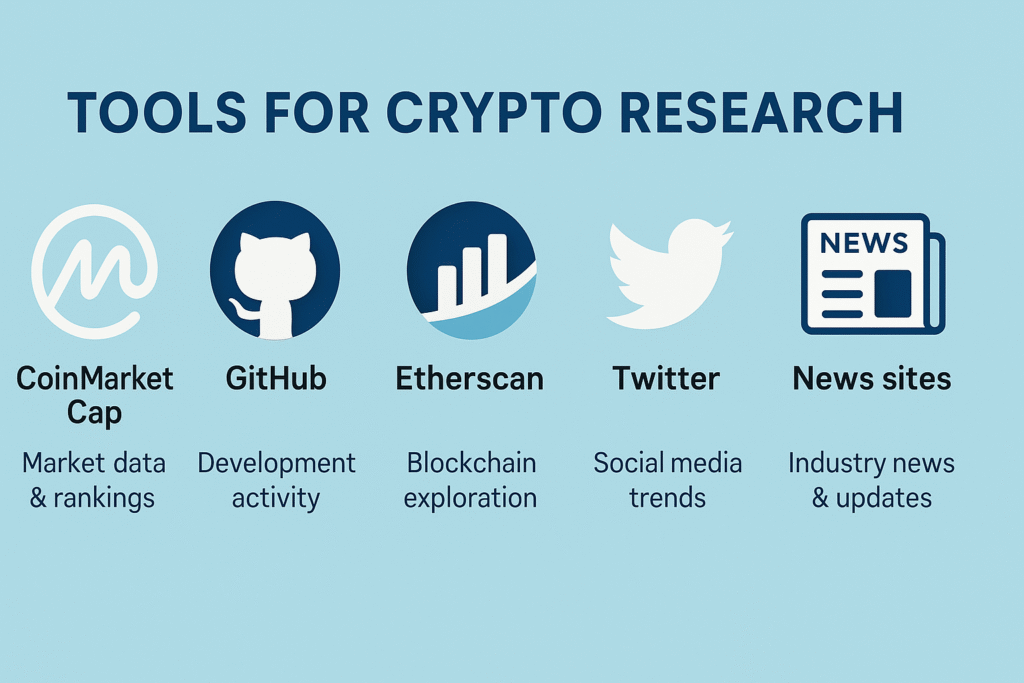
A. Crypto Data Aggregators (Your Starting Point) ?
- Tools: CoinFulcrum.com, CoinMarketCap – coinmarketcap.com, : CoinGecko – coingecko.com, Coinstats, Messari.
- What they offer: These platforms provide a wealth of information at a glance:
- Market Capitalization: Helps you gauge a project’s size and relative risk.
- Price & Trading Volume: Insights into liquidity and recent price action.
- Charts: Visualize historical price trends.
- Links to Official Resources: Direct links to project websites, whitepapers, social media, and exchanges where the coin is listed.
- How to use: Start here for initial screening. Filter by market cap, volume, or category. Click through to official links for deeper dives.
B. Project Websites & Whitepapers (Deep Dive) ?
- Importance: Always go directly to the project’s official website. This is the primary source of information, where you’ll find the most up-to-date whitepaper, team information, roadmap, and official announcements.
- How to use: Bookmark the official sites of projects you’re researching. Download and read their whitepaper (or a summary if available). Look for a “Docs” or “About Us” section.
C. Social Media & Community Platforms (Pulse Check) ?
- Platforms:
- Twitter/X: Essential for real-time news, announcements, and engaging with the community and project team. Follow the official project account and its key team members.
- Discord / Telegram: Often serve as the primary direct communication channels between the team and the community. Great for asking questions and getting real-time updates.
- Reddit: Provides community discussions, diverse opinions, and sometimes critical analyses or warnings.
- How to use: Observe the quality of engagement. Is it constructive? Is the team responsive? Be wary of overly hyped or spam-filled groups.
D. Blockchain Explorers (On-Chain Verification) ??
- Tools: Etherscan – etherscan.io (for Ethereum and ERC-20 tokens), BscScan – bscscan.com (for BNB Chain), Solscan – solscan.io]) (for Solana), Polygonscan – polygonscan.com]) (for Polygon).
- What they offer: These powerful tools allow you to view public data directly on the blockchain:
- Transaction History: See who is sending/receiving tokens.
- Token Holders: View the distribution of tokens among addresses (helps identify concentration).
- Contract Code: For developers, but for beginners, simply seeing that there is audited code is a good sign.
- Network Activity: Gauge overall usage of the blockchain.
- How to use: Look up the altcoin’s contract address to view its token holders and transaction volume. Pay attention to the top holders – is the supply too concentrated?
E. Reputable Crypto News & Research Sites (Stay Informed) ?
- Examples: CoinDesk, Cointelegraph, The Block, Decrypt, Messari (for more in-depth reports).
- How to use: Regularly read articles, analyses, and interviews from trusted sources. These can provide macro market insights, regulatory updates, and deep dives into specific projects. Always cross-reference information and be aware of potential biases.
V. Avoiding Common Pitfalls: Red Flags for Beginners ?
Even with the best tools, the crypto market can be a minefield. Being aware of common red flags is crucial for spotting good crypto projects and staying safe.
- Vague or Non-Existent Whitepaper: This is a fundamental deal-breaker. If a project can’t clearly articulate its purpose and how it works, it likely doesn’t have one, or it’s hiding something.
- Anonymous or Inexperienced Teams: While decentralization can involve anonymity, for new projects, a publicly known, experienced, and verifiable team adds immense credibility and accountability. Be highly skeptical of teams that are entirely unknown or have no relevant track record.
- Unrealistic Promises & Excessive Hype (Too Good to Be True) ?: Phrases like “guaranteed returns,” “get rich quick,” or “this is the next 1000x gem” without any fundamental basis are classic scam indicators. If it sounds too good to be true, it almost certainly is.
- Poor Tokenomics (e.g., concentrated supply): If a very small number of wallets (especially those linked to the team or early investors) hold a huge percentage of the total token supply, they have immense power to manipulate the price, often at the expense of smaller investors.
- Lack of Development Activity: No recent code updates on GitHub, no new features being released, and no consistent public communication about progress suggest the project might be stagnant, abandoned, or simply a façade.
- Lack of Clear Use Case: If, after your research, you still can’t articulate what real problem the altcoin solves or why anyone would actually use it, then its value is purely speculative and highly risky.
- Unsolicited Messages & Direct Messages (DMs): Be extremely wary of anyone messaging you directly on social media or Telegram, offering investment advice, “exclusive” opportunities, or asking for funds. These are almost always scams.
VI. Building Your Altcoin Discovery Process. (A Step-by-Step Approach) ?
To put all this knowledge into action, here’s a structured approach for your personal altcoin discovery process:
- Define Your Investment Goals & Risk Tolerance ?:
- Question: What do you hope to achieve with crypto investments (e.g., long-term growth, short-term gains, supporting specific tech)? How much are you truly willing to lose without impacting your financial stability?
- Action: Write down your personal investment philosophy and risk tolerance. This will guide all your subsequent decisions.
- Start Broad (Data Aggregators) ?:
- Action: Browse CoinMarketCap or CoinGecko. Look beyond the top 10. Explore projects within categories that interest you (e.g., DeFi, Gaming, AI).
- Tip: Look for projects in the top 100-500 by market cap initially, as they often have more accessible information.
- Initial Filter (Quick Check for Red Flags) ?:
- Action: For any interesting project, quickly check if they have an official website, a whitepaper, and active social media. If not, discard immediately.
- Tip: If the website looks unprofessional or the whitepaper is just a few pages of marketing fluff, move on.
- Deep Dive (Official Resources) ?:
- Action: Once a project passes the initial filter, dedicate time to reading its whitepaper thoroughly (or at least the executive summary and core sections). Explore their official website in detail.
- Tip: Take notes! Write down what problems they solve, their proposed solutions, team members, and roadmap.
- Verify & Validate (On-Chain & Community) ??:
- Action: Use blockchain explorers to check token distribution and activity. Join their Discord or Telegram (if available) and observe the quality of conversations and team responsiveness. Check their GitHub for recent code commits.
- Tip: Pay attention to how the community behaves. Is it mature and focused on development, or just price speculation?
- Compare & Contrast (Competitive Analysis) ?:
- Action: Identify the project’s main competitors. How does your chosen altcoin differentiate itself? What are its strengths and weaknesses compared to others in the same space?
- Tip: Be objective. Don’t fall in love with a project simply because you’ve spent time researching it.
- Diversify & Allocate Wisely ?:
- Action: Based on your research, decide if the altcoin fits your portfolio. Don’t put all your capital into one or two altcoins. Spread your investments across several promising projects and different categories (e.g., some DeFi, some Layer 1s, some GameFi).
- Tip: Adhere to your defined risk tolerance. Smaller, newer altcoins should typically be a smaller percentage of your total crypto portfolio.
- Monitor & Re-evaluate Regularly ?:
- Action: The crypto market is dynamic. Keep up with project updates, news, and market changes. Re-evaluate your investment thesis periodically (e.g., quarterly or semi-annually).
- Tip: Set price alerts or follow official announcement channels to stay informed.
VII. Conclusion: Empowering Your Altcoin Journey ?
You’ve now armed yourself with the essential knowledge and a practical framework to move beyond crypto hype and dive confidently into the world of altcoin analysis and discovery. This guide has provided you with the tools to research altcoins effectively, identify their underlying potential, and navigate the exciting yet complex crypto market with greater insight.
Remember, the goal is not to find a mythical “next Bitcoin” overnight, but to build a sustainable altcoin discovery process that empowers you to make informed, data-driven decisions. By diligently focusing on fundamentals, leveraging the right resources, and remaining vigilant against common pitfalls, you can transform from a passive observer into an active, strategic participant in the decentralized future.
Your journey of continuous learning and diligent research is the ultimate key to responsible investing and long-term success in the dynamic world of altcoins. Happy researching!
?? Disclaimer: The content provided in this article is for informational and educational purposes only and should not be considered financial advice. Cryptocurrency investments are highly volatile and carry a significant risk of loss. Always conduct your own research (DYOR) and consult with a qualified financial professional before making any investment decisions.
? Further Reading
How AI Is Disrupting Crypto in 2025: Top Trends & Tokens You Need to Know
Best Meme Coins to Buy in 2025: Top 5 Picks + 1 Hidden Gem
How to Buy Cryptocurrency: 3 Easy Simple Steps
? Don’t Miss a Beat in Crypto
Be the first to know about new crypto trends, beginner guides, and hidden gems — straight to your inbox.
? Subscribe now and stay ahead of the Web3 curve.


? Jawad — Founder & Lead Writer at CoinFulcrum
I’m a crypto researcher, blockchain enthusiast, and the voice behind CoinFulcrum.com. My mission is to simplify complex crypto topics and explore how emerging tech is reshaping finance.
When I’m not analyzing DeFi trends or testing new AI tools, I’m creating content to help you stay ahead of the curve.
Discover more from CoinFulcrum
Subscribe to get the latest posts sent to your email.


